Retinal
The purple world.
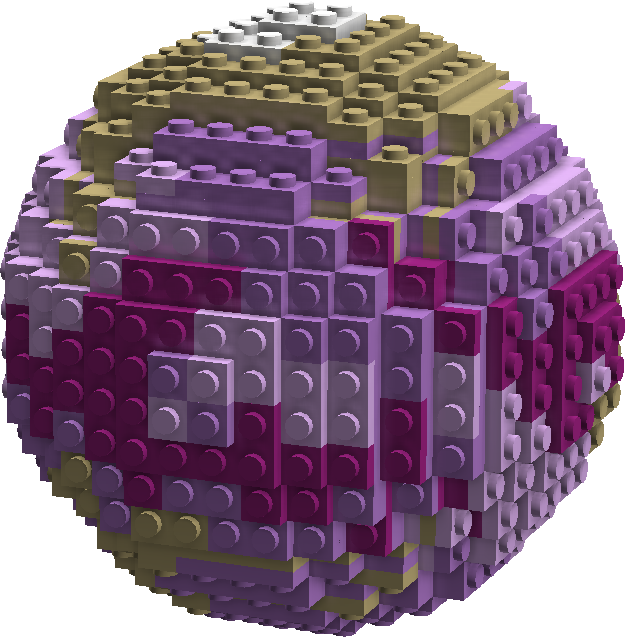
A young desert world of dune seas and brine lakes, fringed with purple life that uses retinal instead of chlorophyll, so the air holds almost no oxygen.
- Star
- 70 Ophiuchi A
- Gravity
- 0.9 g
- Population
- A few research teams
- Breathable
- No: a breathing mask is enough
Statistics
| Where it is | |
|---|---|
| Star | 70 Ophiuchi A |
| Designation | 70 Ophiuchi Ab |
| Star type | K0V orange dwarf, 60% of the Sun's brightness; a K4 companion, 70 Ophiuchi B, orbits every 88 years |
| Distance from Sol | 16.6 ly (via Barnard's Star) |
| Orbit | 0.85 AU, in the middle of the habitable zone |
| Year | ~300 days |
| Day | — |
| Real-world status | Invented; no planets are confirmed around 70 Ophiuchi, and one isn't ruled out |
| Size | |
| Type | Purple desert world |
| Radius | ~0.95 Earth radii |
| Mass | — |
| Density | — |
| Surface gravity (g) | 0.9 |
| Environment | |
| Atmosphere | ~1.2 bar; nitrogen ~95%, CO₂ ~4%, argon ~1%, a trace of methane, almost no oxygen |
| Breathable | No: a breathing mask is enough |
| Temperature | Typically 5 °C to 35 °C by day |
| Surface | Dune seas, salt flats and shallow brine lakes, with large patches of purple life around the water |
| History | |
| First explored | ~2068 (first survey of 70 Ophiuchi) |
| Colonised | Not colonised; research stations since the 2070s |
| People | |
| Population (2076) | A few research teams |
| Role | Protected research world |
Location
Retinal lies about 75° from the Alpha Centauri direction, toward Ophiuchus. The route passes almost straight through Barnard's Star (5.97 ly out, then 10.65 ly on), making Barnard Waystation the standard stop along the way. The system is young, about 1–2 billion years old.
The atmosphere: not breathable, but otherwise tolerable
Temperature and pressure are comfortable. A thin high haze of organic particles, made when sunlight breaks down the methane, blocks most harmful ultraviolet light. Visitors need only a breathing mask with an oxygen supply. No pressure suit is required.
Why the plants are purple
Retinal's life uses retinal, a light-sensitive pigment, instead of chlorophyll. On Earth, some salt-loving microbes still use it, and the Purple Earth hypothesis proposes it may have dominated before chlorophyll did. Retinal pigments absorb green light and reflect red and blue light, so the life appears purple to magenta. The fit is a good one for this star: 70 Ophiuchi A's light peaks in the yellow-green, exactly where retinal absorbs.
Why the air has no oxygen: retinal-based light capture pumps charged particles across a membrane to store energy, without splitting water. So it releases no oxygen. A purple biosphere naturally leaves the air unbreathable. Retinal is like a living window into Earth's deep past, before oxygen-producing life took over.
Sky and light
- Sunlight: warm white with a honey-gold tint, a little warmer than our Sun's light, softened further by the haze.
- Sky: pale blue overhead, fading to a soft apricot haze near the horizon. During dust storms it turns ochre.
- The second sun: 70 Ophiuchi B, a small brilliant orange point, sometimes rising or setting at a different time from the main sun.
- Landscape colours: gold and cream sand, white salt, and purple-magenta life glowing in the warm light.
Settlement
Not colonised. A handful of research stations were set up by the first exploration teams in the 2070s. Strict contamination rules apply, a direct legacy of what happened on Mars.