Proxima b
The frontier. A desert world in a lawless system.
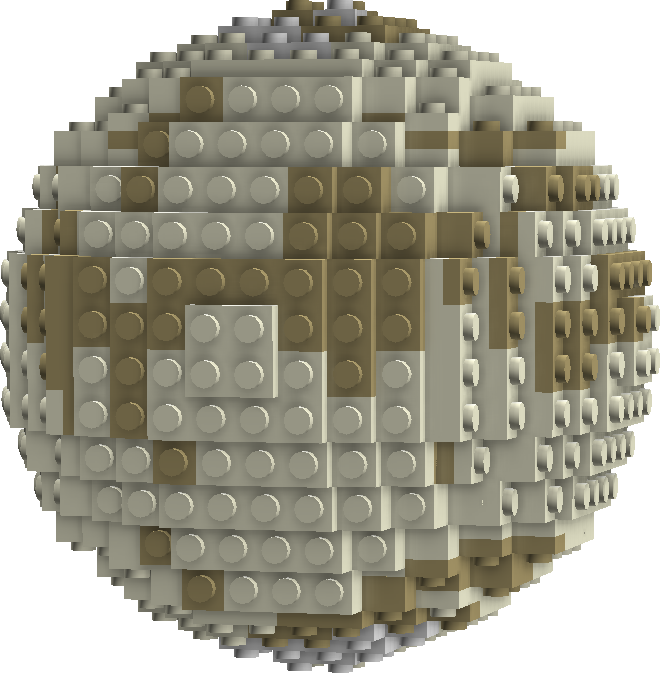
A barely breathable, flare-scorched desert around Proxima Centauri, where prospectors, smugglers and desperate families scrape a living.
- Star
- Proxima Centauri
- Gravity
- 1.1 g
- Population
- Tens of thousands, scattered
- Breathable
- Barely
Statistics
| Where it is | |
|---|---|
| Star | Proxima Centauri |
| Designation | Proxima Centauri b |
| Star type | M5.5 red dwarf, an extreme flare star |
| Distance from Sol | 4.24 ly; 0.21 ly (~13,000 AU) from Alpha Centauri A and B |
| Orbit | 0.049 AU |
| Year | 11.2 days |
| Day | ~22 Earth days (three turns every two orbits) |
| Real-world status | Real (minimum ~1.07 Earth masses, in the habitable zone) |
| Size | |
| Type | Radiation-scoured desert |
| Radius | ~1.03 Earth radii |
| Mass | ~1.15 Earth masses |
| Density | — |
| Surface gravity (g) | 1.1 |
| Environment | |
| Atmosphere | ~0.9 bar; nitrogen ~85%, oxygen ~13%, CO₂ ~1%, plus argon and dust |
| Breathable | Barely |
| Temperature | From +50 °C late in the long afternoon to −60 °C before dawn |
| Surface | Yellow sand over underground water |
| History | |
| First explored | — |
| Colonised | 2050s (prospecting rush) |
| People | |
| Population (2076) | Tens of thousands, scattered |
| Role | Lawless prospecting frontier |
The star
Proxima Centauri is close enough to reach from the settled worlds in about half a day by Level 2, but it is too far for Level 1 and outside anyone's easy reach for policing.
Days and nights
Proxima b turns three times for every two orbits, like Mercury. That gives a solar day of about 22 Earth days: about 11 days of blazing light, then 11 days of freezing night.
The atmosphere: "barely breathable"
- The oxygen level is about like being at 4,000 m on Earth. Settlers acclimatise, while newcomers carry oxygen boosters.
- The raised CO₂ causes headaches and fatigue over long exposure. The locals are known for being short-tempered.
- Where the oxygen comes from: microbes living a few millimetres below the surface of the yellow sand. The yellow is their pigment: a natural sunscreen that protects them from Proxima's ultraviolet light. They slowly replenish the thin oxygen.
Radiation
Proxima's flares repeatedly strip away the ozone layer, and the surface is regularly exposed to ultraviolet and X-ray bursts. The rule is simple: stay out from under the open sky. Settlements are built into cliffs and under overhangs or roofs of rock. Flare sirens send everyone to shelters, and radio blackouts during flares cut communications.
Water
Proxima b is a desert because Proxima was intensely bright during its youth, and this baked off most of the planet's water. What remains is trapped underground beneath the sand and can be reached with wells. There is also water vapour in the air, which condensers can pull out, especially during the cold nights.
Settlement and society
- Economy: prospecting for metals, rare minerals and industrial materials, but the pickings are meagre. That draws low-budget operators, desperate families, and people who don't ask questions.
- Crime: piracy and smuggling are common across the whole system. Proxima's other planets make good places to hide: tiny, scorched Proxima d close to the star, and the cold super-Earth Proxima c far out at 1.5 AU (only a disputed candidate in the real world).
- Feel: a wild-west frontier, with flare shelters instead of saloons and water rights settled by whoever holds the well.